
Starting a small business comes with a long list of new jobs, and "doing the books" is the one most people dread. Here's the good news: bookkeeping for beginners doesn't need to be a headache. At its heart, bookkeeping is simply keeping a record of the money coming into your business and the money going out. You can learn the basics as you go, no accounting degree needed.
This guide walks you through it step by step: what bookkeeping actually means, how to choose a simple system, which records to keep, and a short weekly routine that keeps everything in order.
What bookkeeping means (and what it does not need to become)
Bookkeeping is the habit of recording your business income and expenses, transaction by transaction, so you always know where your money is. That's it. Your books only need to answer three questions:
- What money came in, and from whom?
- What money went out, and what was it for?
- Who still owes you, and who do you still owe?
It helps to know how bookkeeping differs from accounting. A bookkeeper records the day-to-day transactions and keeps the records tidy. An accountant works with those records to analyse the numbers and give advice. Many small business owners do their own bookkeeping and only bring in a professional when they need one, and that's a perfectly good way to start.
One thing bookkeeping does not need to become: a heavy accounting system with features you'll never touch. Simple, consistent records beat complicated ones you avoid opening.
Choose a simple system for your records
There's no single right way to keep your books. Pick the system you'll actually use.
A notebook or paper ledger. This works when you have a handful of transactions a month. The downside appears as you grow: totals take longer to add up, and finding one entry from months ago means flicking through pages. One more thing to check before you commit to paper: some countries are moving tax record-keeping into software. In the UK, for example, Making Tax Digital for Income Tax and Making Tax Digital for VAT mean many businesses now need to keep digital records, so it's worth checking the rules in your country before you settle on paper.
A spreadsheet. Free and flexible, and fine for many very small businesses. The common problems are typing mistakes, broken formulas and files scattered across devices. If a formula quietly goes wrong, your totals go wrong with it.
A bookkeeping app. Software does the adding up for you, keeps your receipts attached to the right entries and turns your records into reports when you need them. EasyBooks, for example, is a simple bookkeeping app for Mac and iOS that records income and expenses, produces PDF invoices and gives you reports such as a profit and loss statement, without turning bookkeeping into a second job.
If your records already live in spreadsheets, no need to start again: EasyBooks imports CSV files from spreadsheets on Mac, so you can bring your history with you. If an app sounds like the right fit, you can try EasyBooks free for 14 days and set up your first records as you work through this guide.
Whichever system you choose, the rule is the same: one place for your records, kept up to date.
The records every small business should organise
You don't need dozens of ledgers on day one. Start with these:
A separate business bank account. Mixing business and personal money is the fastest way to lose track of both. A dedicated account means every line on your bank statement belongs to the business, which makes your bookkeeping dramatically easier.
A record of every sale. Who paid you, when, and how much. If you send invoices, keep them numbered and stored in one place.
A record of every expense, with its paperwork. For each cost, keep the receipt or bill that explains it. A good habit is simple: if you couldn't explain an entry to someone else a year from now, attach the document that would. Photographing or scanning receipts into your bookkeeping app keeps them safe and searchable.
A list of who owes you. Unpaid invoices are easy to lose sight of when you're busy. Keeping track of paid versus unpaid means you can send a friendly reminder before a late payment becomes a cash flow problem.
As your books grow, these records naturally group into accounts such as cash, sales and purchases. No need to memorise them now. When you're curious, our guide to the basic types of bookkeeping walks through them one by one.
A practical weekly bookkeeping routine
Little and often beats a yearly panic. Most small business owners find that a short session once a week is enough to stay on top of things. Here's a routine you can copy:
- Record the week's income. Enter each payment received and match it to its invoice.
- Record the week's expenses. Enter each cost and attach the receipt while you still remember what it was for.
- Check unpaid invoices. Anything overdue? Send a polite reminder now rather than next month.
- File the paperwork. Statements, bills and receipts go into their one home, digital or physical.
- Glance at the bigger picture. A quick look at income versus expenses tells you how the month is really going, with no surprises later.
Missed a week? No need to worry. Pick up where you left off; the routine is forgiving as long as the records catch up.
If you'd rather have the adding up done for you, this weekly routine is exactly what EasyBooks is built for on Mac and iOS. Try the routine there this week.
The few terms worth learning first
You'll meet plenty of jargon eventually, but only a handful of terms matter at the start. Each one is simpler than it sounds:
- Income (or revenue): the money your business earns from selling goods or services.
- Expenses: the money your business spends in order to operate.
- Accounts receivable: money owed to you by customers who haven't paid yet.
- Accounts payable: money you owe to suppliers you haven't paid yet.
- Profit and loss statement: a report showing your income minus your expenses over a period, so you can see whether you made a profit.
- Balance sheet: a snapshot of what your business owns and owes at a single point in time.
That's genuinely enough to get going. When you're ready for more, our plain-English glossary of bookkeeping terms covers the rest.
When to ask a bookkeeper or accountant for help
Doing your own books is a great way to understand your business, and for many small businesses it's all that's ever needed. Still, there are moments when professional help earns its fee:
- your business has grown to several income streams or entities and the weekly session no longer fits in a week;
- you're taking on employees or large purchases and want the records structured properly from the start;
- you're unsure about the financial rules that apply in your country, and want them handled by someone who deals with them every day;
- the time you spend on the books has become more expensive than paying someone else to do them.
Asking for help isn't a step backwards. Well-kept records are exactly what makes a bookkeeper or accountant fast and inexpensive to work with, so everything you've organised so far still pays off.
Your next step: use the bookkeeping checklist
You now know the basics: keep your records in one simple system, organise the essentials, and run a short weekly routine. The easiest way to put it into practice is to follow a checklist, so nothing gets forgotten while the habit forms.
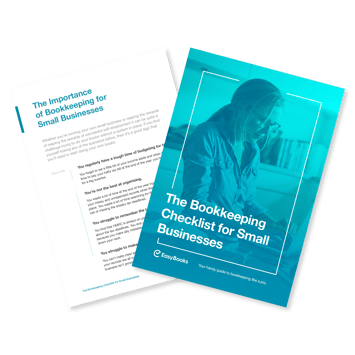
We've put together a free small business bookkeeping checklist that takes you from setting up your records to staying organised month after month.